

Short answer: Depth of discharge (DoD) is how much of a battery’s capacity you use before you charge it again, shown as a percent. Drain a 10kWh battery down to 2kWh left and you’ve hit 80% DoD. For a LiFePO4 solar battery, DoD tells you how much energy you can really count on and how its cycle life was tested.
Key takeaways
- DoD and state of charge are two sides of the same number. 80% DoD means 20% state of charge left.
- Many LiFePO4 spec sheets rate cycle life at 80% DoD, so read the test conditions next to the cycle count.
- Usable kWh can be less than the nameplate kWh if the maker recommends a DoD limit.
- You set the real DoD with the low battery cutoff in your inverter or BMS settings.
What does depth of discharge mean on a battery?
It’s the share of the battery’s capacity you’ve pulled out since it was full. A battery at 100% charge is at 0% DoD. Run it down to 30% charge and you’re at 70% DoD.
State of charge (SoC) is the flip side. It’s what’s left in the tank. Most inverter apps and battery screens show SoC, so you’ll usually work out DoD from it.
| State of charge left | Depth of discharge | Energy used from a 10kWh battery |
|---|---|---|
| 90% | 10% | 1kWh |
| 50% | 50% | 5kWh |
| 20% | 80% | 8kWh |
| 10% | 90% | 9kWh |
| 0% | 100% | 10kWh |
How does depth of discharge affect usable battery capacity?
Usable capacity is the nameplate kWh times the DoD you plan to run. That’s the number to plug into any sizing math.
Spec sheets handle this differently, and it’s easy to miss. A few real examples from batteries we carry:
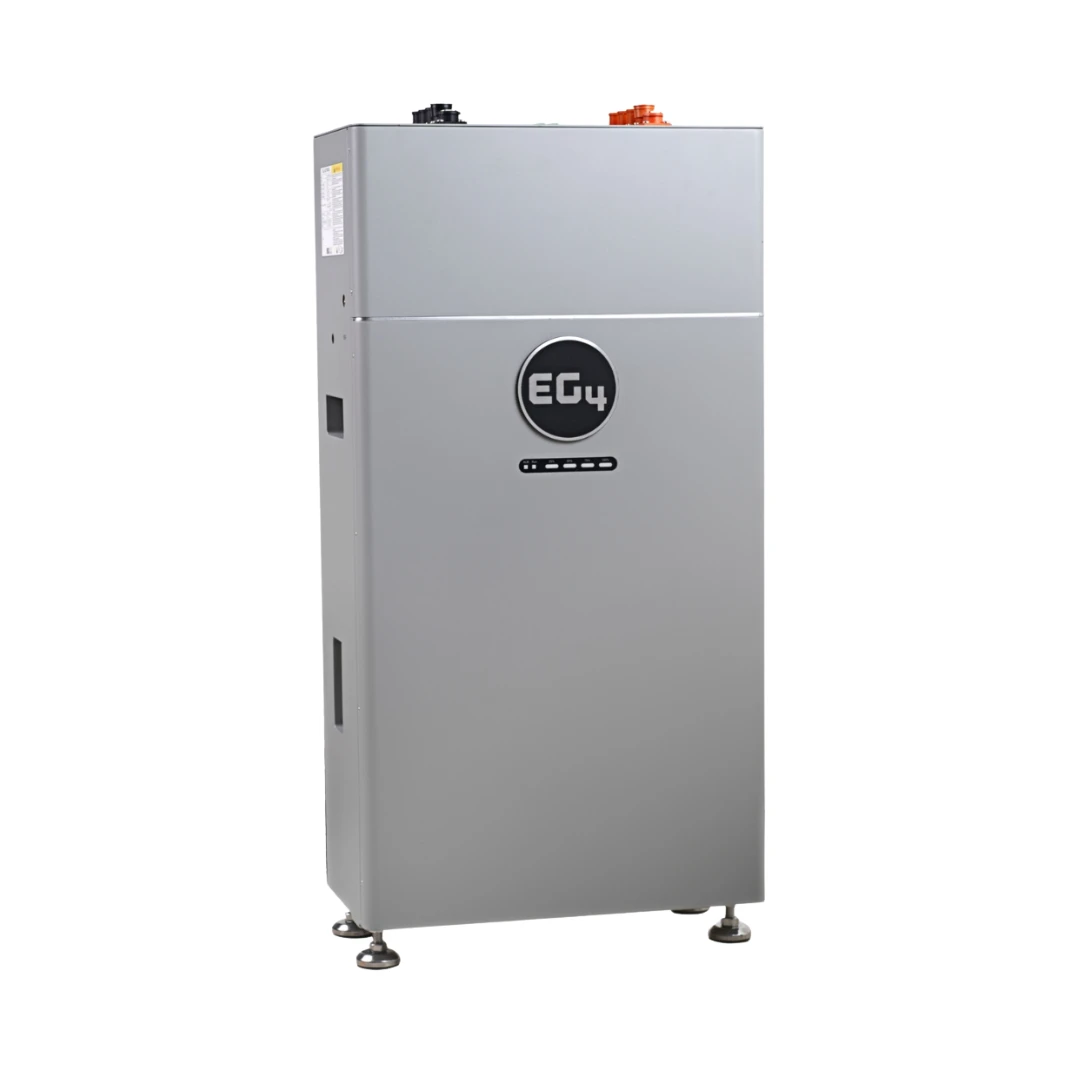
- EG4 WallMount All Weather 16kWh: EG4 lists 16kWh nominal but 12.86kWh of recommended usable energy, based on an 80% DoD. It recommends setting the low cutoff no lower than 20%.
- RUiXU Lithi2-16: RUiXU’s spec sheet lists 16kWh of usable capacity at 100% DoD.
- SunGold SG48100M: the manual gives an SoC working range of 0 to 100%, with a recommended range of 20% to 95%.
So two batteries with the same 16kWh label can be quoted with different usable numbers. Neither is wrong. They’re just stating it two ways, and you should compare them on the same DoD.
Want to see how kWh and amp hours line up first? Our guide on amp hours to kWh covers the conversion.
Does a deeper depth of discharge shorten battery life?
It can, but less than you might think with LiFePO4. Chemistry matters a lot here.
Sandia’s chapter on lithium ion batteries in the DOE Energy Storage Handbook says cycle aging depends on depth of discharge, charge and discharge rate, and temperature. It explains that a narrower window cuts the mechanical stress on the electrodes as they swell and shrink.
LiFePO4 holds up well, though. A 2026 battery degradation presentation from the National Laboratory of the Rockies (formerly NREL) notes that sensitivity to DoD depends on chemistry, and that the degradation rate of LFP is insensitive to depth of discharge, while NMC is sensitive to it. The same deck points out that heat and cold, and how long a battery sits at high charge, also drive wear.
In plain terms: with an LFP battery, using 80% or 90% of it each day is normal. Temperature and charge rate deserve just as much attention.
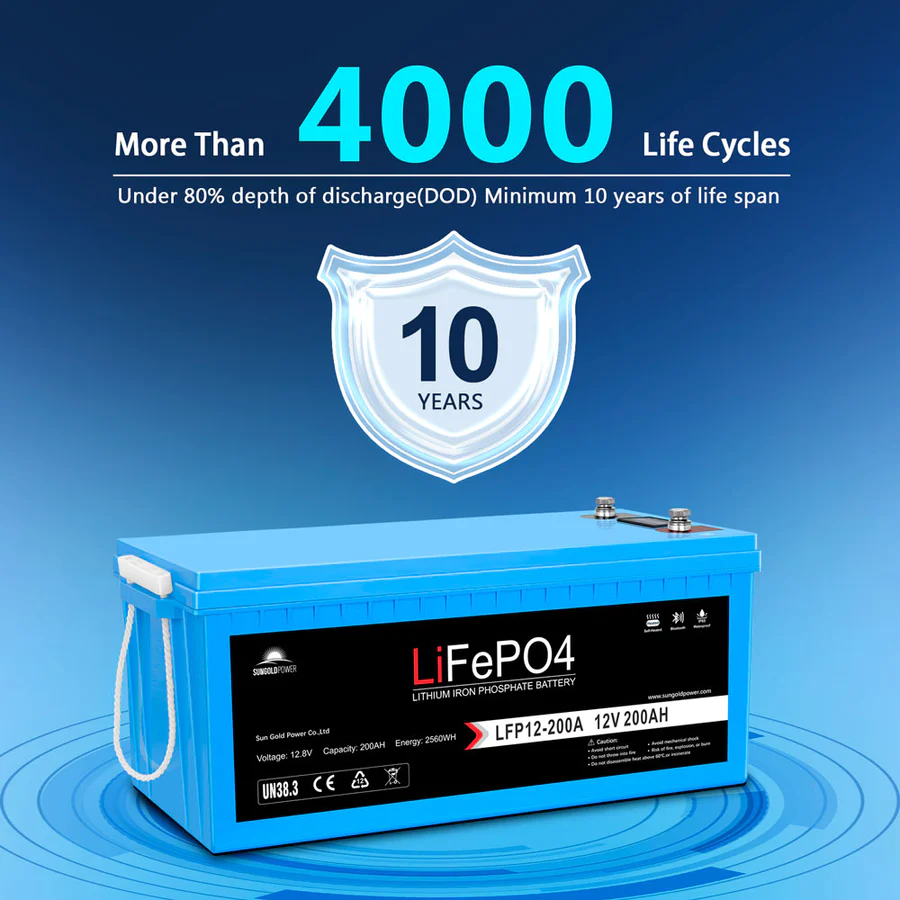
How do you read cycle life ratings at 80% DoD?
Treat a cycle rating as a lab result under set conditions, not a promise for your house. Always read the fine print next to the number.
| Battery | Rated cycles | Test DoD | Other test conditions listed |
|---|---|---|---|
| EG4 WallMount All Weather | 10,000 to 70% capacity | 80% | 0.5C, 25°C |
| RUiXU Lithi2-16 | 9,500 or more | 80% | Rate and temperature not stated on the spec sheet |
| SunGold SG48100M | 7,000 or more | 80% | 0.5C charge and discharge, 25°C |
A higher count at the same DoD and temperature is a fair comparison. A count tested at a shallower DoD isn’t. The national lab deck also warns that datasheet tests are often sped up, so real batteries pick up more calendar aging by the time they reach the same cycle count.
What depth of discharge should you set for a LiFePO4 solar battery?
Start with what the maker recommends. On the batteries above, that’s 80% DoD for daily cycling. Then adjust for how you use the system.
- Check the spec sheet or manual. Use the recommended DoD or SoC range as your baseline.
- Set the low battery cutoff. In your inverter or battery settings, a 20% cutoff gives you 80% DoD.
- Keep an outage reserve. On a grid tied hybrid system, you can hold back a higher reserve for backup and only cycle the rest.
- Watch the cold. Low temperatures limit charging on many LiFePO4 batteries, so a deep evening drain in winter may not get refilled the next day.
Running off-grid? Size the bank so a normal night only takes you to your target DoD, with room left for a cloudy day.
How does depth of discharge change battery sizing?
Divide the energy you need by the DoD you plan to use. That gives the nameplate kWh to shop for.
Say you need 10kWh each night and plan to stop at 80% DoD. 10 divided by 0.8 is 12.5kWh of nameplate capacity. At 90% DoD it’s about 11.1kWh. Add some margin for inverter losses and aging on top.
Our solar battery calculator does this math for you, and the guide on how to size a solar battery bank walks through loads, days of autonomy and voltage.
Frequently asked questions
Is it OK to discharge a LiFePO4 battery to 0%?
The BMS will cut the battery off before the cells are damaged, but running to empty on a routine basis isn’t a good plan. Most makers recommend a floor. EG4 suggests a low cutoff no lower than 20% on its WallMount batteries, and SunGold recommends a 20% to 95% working range on the SG48100M.
What is a good depth of discharge for a solar battery?
For LiFePO4, 80% DoD is a common daily target, and it’s the level many cycle life ratings are tested at, including those for the EG4 WallMount, RUiXU Lithi2-16 and SunGold SG48100M. If the battery is mostly for backup on a grid tied system, you might keep a bigger reserve and cycle less of it each day.
Is depth of discharge the same as state of charge?
No, they are opposites that add up to 100%. State of charge is how full the battery is. Depth of discharge is how much you have used. A battery showing 25% state of charge is at 75% depth of discharge.
Does 100% usable capacity mean a battery is better?
Not by itself. Some makers list usable energy at 100% DoD and others at 80% or 90%, so the label alone doesn’t tell you which battery holds more. Compare batteries at the same DoD, then look at cycle life, the test conditions behind it, warranty terms and temperature limits.